You bought a scratching cat post, set it up in the living room, and your cat walked right past it to shred the couch instead. You’re not alone, and it’s not because your cat is stubborn. Most scratching posts fail because they’re the wrong height, the wrong texture, or placed somewhere your cat has zero interest in visiting.
The fix isn’t more posts, it’s the right post. A good cat scratching post needs to be tall enough for a full stretch, sturdy enough that it won’t wobble on the first swipe, and covered in material your cat actually wants to dig into. Below, I’ve broken down six options that consistently get used, not ignored, based on stability, material, and real cat behavior rather than marketing claims.
We cover sisal-wrapped posts, cardboard scratchers, and vertical versus horizontal styles, so you can match the post to your cat’s specific habits, whether you’re outfitting a kitten just learning where to scratch or trying to protect furniture from cats with a determined adult scratcher. This list works alongside the redirection techniques we teach in the 7-day scratch-free program, since even the best scratching post for cats only works when it’s placed and introduced correctly.
1. Classic sisal rope post
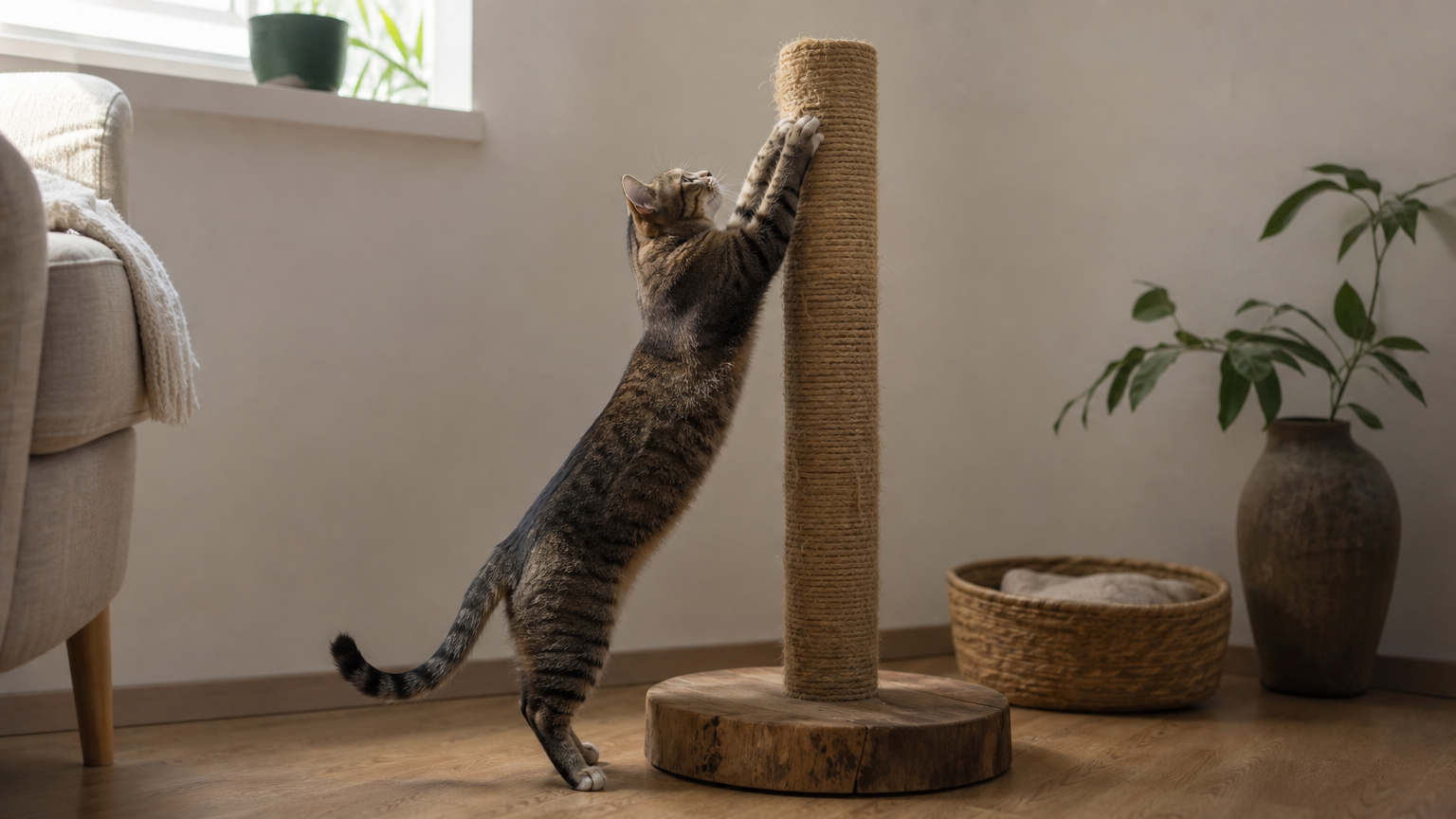
The classic sisal rope post is the gold standard, and for good reason. It’s a vertical post wrapped tightly in natural sisal rope, mounted on a weighted base that keeps it from tipping when your cat leans into a full-body stretch. If you only buy one item off this list, this is the cat scratching post most behaviorists recommend first, paired with training that stops cat scratching on furniture.
How it works
Sisal rope gives cats a rough, fibrous texture that shreds satisfyingly under their claws, which is exactly the sensation that pulls them away from your couch or curtains. The vertical scratching post design lets a cat stretch its spine fully upright, digging in with front claws while its back legs stay planted, which mimics the natural stretch-and-mark instinct behind scratching cats use in the wild. Height matters here: anything under 28 to 30 inches won’t let an adult cat extend all the way, and a post that wobbles even slightly gets abandoned within a day.
A wobbly base kills more scratching posts than the wrong material ever does.
Who it’s for
This style suits almost every household, but it’s especially important if you’ve got an adult cat with an established scratching habit on furniture. It also works well as the anchor piece in a multi-cat household, since sisal posts tolerate heavy daily use better than cardboard or carpet-wrapped alternatives. If your cat already has preferred scratching spots, place the post right next to one; that placement decision often matters more than the post itself.
Price range
- Budget models ($15 to $25): Thinner rope, lighter base, fine for a single light-use cat
- Mid-range models ($25 to $45): Thicker rope, heavier base, better stability for daily use
- Premium models ($45 to $80): Extra-tall posts (32+ inches), natural wood bases, built to outlast years of scratching
Spend the extra money on base weight before you spend it on looks. A heavy, boring post your cat actually uses beats a stylish one gathering dust in the corner.
2. Corrugated cardboard scratcher
Cardboard scratchers look flimsy compared to a sisal post, but plenty of cats prefer them, and that preference is worth respecting. This flat or slightly curved piece of dense, layered cardboard sits horizontally or in a shallow incline, giving your cat a different surface to dig into than a vertical post offers.
How it works
The corrugated ridges catch a cat’s claws and shred apart in thin strips, which some cats find more satisfying than rope because the material gives way faster. A cat scratching post in cardboard form works best when it’s replaceable, since the surface wears out after a few months of regular use. Sprinkling loose catnip into the ridges reactivates interest fast, which is a trick worth using anytime you notice scratching activity dropping off.
Cardboard wears out on purpose. Replacing it is the whole point, not a design flaw.
Who it’s for
Cardboard scratchers suit cats who scratch low and horizontal rather than reaching upward, and they’re a smart low-cost addition next to a vertical post rather than a replacement for one. They also work well for kittens still learning where scratching is welcome, since the surface is soft on tiny claws.
Price range
Most cardboard scratchers run $10 to $20, with replacement inserts costing $5 to $10 each. It’s the cheapest entry point on this list, and a reasonable one to test cat preference before investing in pricier gear.
3. Multi-level cat tree with built-in posts
A multi-level cat tree combines several sisal-wrapped posts with platforms, hammocks, and sometimes a hideaway box, all built into one freestanding structure. It’s the closest thing to giving your cat its own vertical territory, and that combination of scratching surface plus climbing space is why cat trees consistently outperform standalone posts in busy households.
How it works
Each post inside the tree functions like a standalone cat scratching post, but the platforms above and below give your cat a reason to return to that spot repeatedly throughout the day. Height and vantage matter to cats as much as texture does; a kitten scratching post built into a low platform gets used out of curiosity, while an adult cat gravitates toward the top perch and scratches on the way up.
Give a cat a reason to hang around, and the scratching happens on its own.
Who it’s for
Cat trees suit multi-cat homes where several animals need separate scratching zones and separate resting spots to avoid territorial tension. They’re also worth the investment for indoor-only cats who need climbing exercise, not just a scratcher cat scratching post combo.
Price range
Expect $60 to $150 for a basic 4-foot tree, and $150 to $300 for larger designs with multiple posts and platforms.
4. Horizontal sisal scratcher
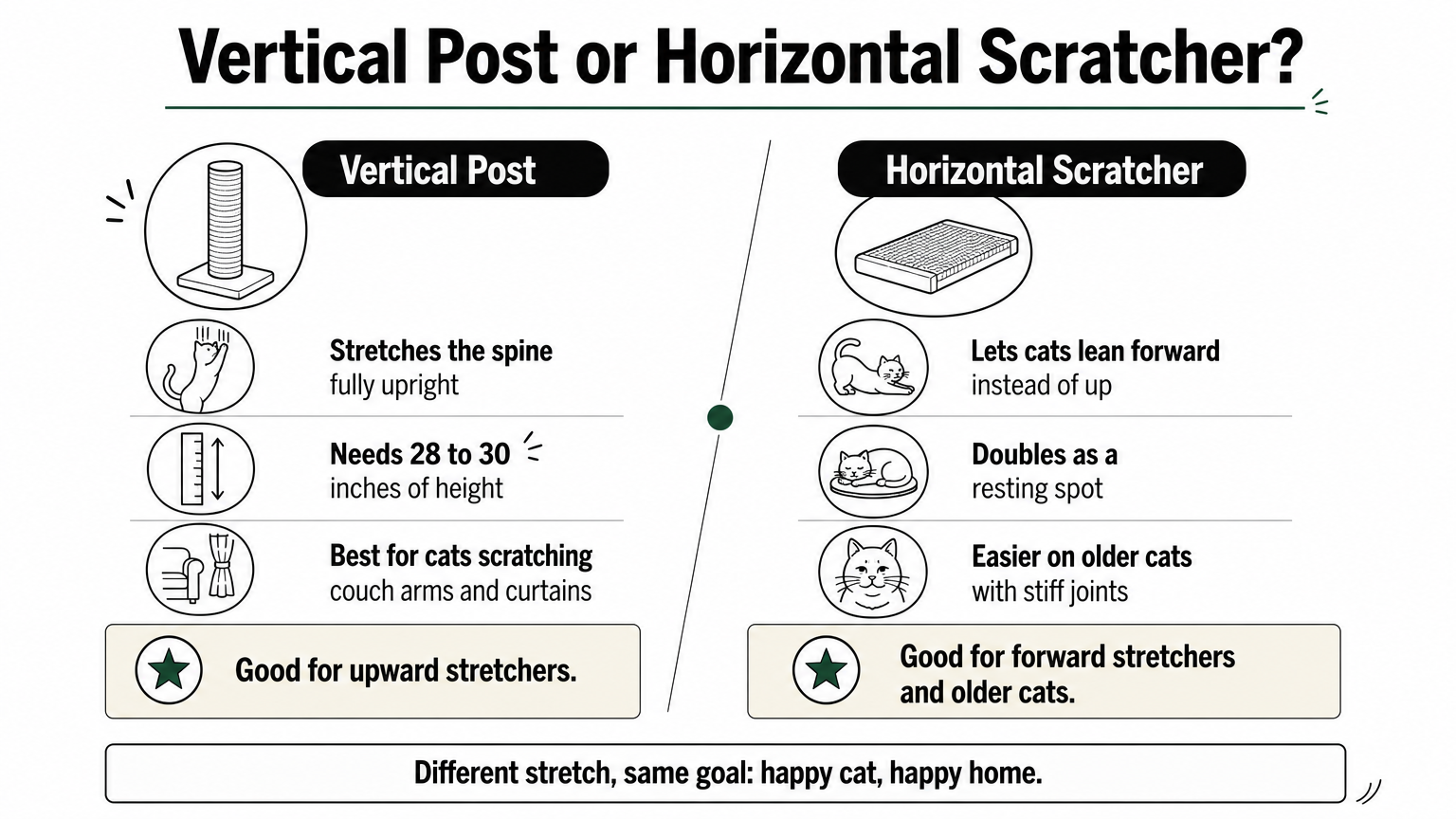
A horizontal sisal scratcher lies flat on the floor or props up at a slight incline, wrapped in the same rough rope you’d find on a vertical post. It’s built for cats that stretch forward instead of upward, and it fills a gap the classic cat scratching post can’t cover on its own.
How it works
Instead of stretching spine-up, your cat leans into this scratcher with front paws extended and back legs pushing off the floor, which is a completely different motion than a vertical post allows. The flat sisal scratching post surface also doubles as a resting spot between scratching sessions, so cats that like to sprawl near a doorway or under a window tend to adopt it fast.
Some cats stretch forward, not up, and no vertical post will ever satisfy that instinct.
Who it’s for
This style works best for cats who already scratch rugs, doormats, or the base of furniture rather than the arms of a couch. Older cats with joint stiffness also prefer it, since reaching upward gets harder with age and a low, flat surface asks less of a stiff back.
Price range
Most horizontal sisal scratchers run $15 to $30, with reinforced or extra-wide models reaching $35 to $50.
5. Wall-mounted corner scratcher
A wall-mounted corner scratcher fastens directly to a wall, usually at a slight diagonal, giving your cat a fixed vertical surface without the floor space a full post demands. It’s a smart pick for anyone tight on room, and it solves a problem the standalone cat scratching post can’t: cats that scratch at wall corners or doorframes instead of furniture.
How it works
The scratcher bolts or screws into a stud, so it holds firm even when a heavy cat throws its full weight into a stretch. Most models wrap the same rough sisal you’d find on a vertical post, mounted at 45 degrees so your cat can dig in with front paws while pushing off the floor at an angle.
A scratcher that’s actually bolted to the wall never gets abandoned for being wobbly.
Who it’s for
This style suits apartment dwellers and renters who can’t fit a floor-standing tree but still want a durable scratching post for cat habits near a favorite corner. It’s also a strong pick for cats who’ve already picked a specific wall or doorframe as their preferred spot, since you can mount it right where the damage is happening.
Price range
Expect to pay $20 to $40 for a basic wall-mounted scratcher, with double-sided or extra-long versions running up to $50.
6. DIY sisal rope post
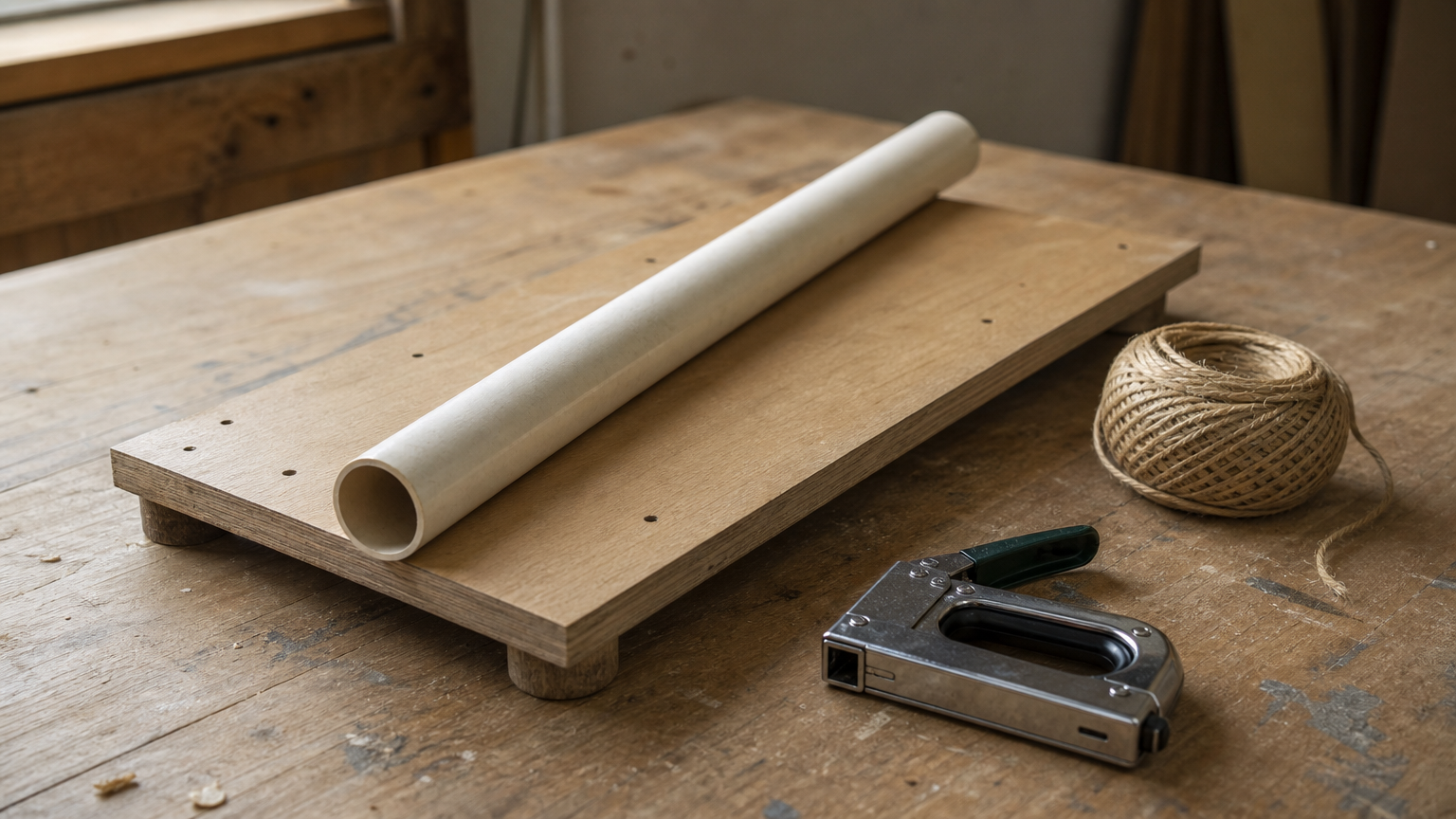
Building your own post costs less than half of a store-bought sisal model, and it’s not hard if you can handle a drill and a staple gun. You need a wood base, a length of PVC pipe or 4×4 post, sisal rope, and construction adhesive. Plenty of cat owners land here after realizing their cat ignored three store-bought options but responded well to a specific rope thickness they had to buy separately anyway.
How it works
Wrap sisal rope tightly around the post, stapling every few wraps so it can’t loosen under repeated clawing. Glue the base to a plywood square heavy enough to prevent tipping, at least 16 inches square for a post over 30 inches tall. The mechanics match any cat scratching post: rough texture, vertical stretch, stable base.
A DIY post only works if the base is heavier than you think it needs to be.
Who it’s for
This suits budget-conscious owners and anyone whose cat rejected commercial kitten scratching post or adult designs for reasons that aren’t obvious. Building your own also lets you match rope thickness to a specific cat’s preference.
Price range
Materials run $15 to $30 total, cheaper than most finished posts on this list.
Choosing the post your cat will actually use
Pick based on how your cat already scratches, not on what looks nicest in your living room. Watch whether your cat stretches upward, digs low and horizontal, or attacks a specific wall corner, and match that habit to one of the six styles above. A sisal rope post covers most cats, but don’t be afraid to mix in a cardboard scratcher or wall-mounted option from our 2026 roundup of posts cats actually use if the first choice gets ignored after a week.
Remember that the right cat scratching post only solves half the problem. Placement, timing, and how you redirect your cat away from furniture matter just as much as the product itself. That’s exactly what we walk through step by step, day by day, in Scratch-Free in 7 Days, backed by a 60-day guarantee if it doesn’t work. If you’re tired of guessing, get the complete cat training system with free bonus guides and a 60-day money-back guarantee and stop losing furniture to a fixable habit.