Your cat needs somewhere to climb, scratch, and survey the room, and your couch keeps winning that job by default. A good cat tree cat condo solves that problem outright, giving your cat a dedicated space to claw, perch, and nap instead of your armrest. The trick is finding one that matches your cat’s size, your home’s square footage, and your patience for assembly instructions.
This list covers 13 options built for different situations, from tiny apartments to multi-cat households with wildly different personalities. You’ll find a compact tree cat condo for studio living, a towering cat tree trunk tower for cats who want height and a view, and sturdy builds designed to survive years of daily scratching without wobbling or shredding apart.
Each pick below includes what makes it worth buying, who it fits best, and where it falls short, so you can compare styles and retailers without guessing. If your cat is still eyeing the furniture after you set one up, pairing the right tree with a plan to stop cat scratching furniture through behavior training and proper post placement makes the difference between a decoration and a spot your cat actually uses.
1. The best overall cat tree for most homes
This pick earns the top spot because it balances height, stability, and price without demanding a spare room. It’s one of those multi-level cat towers with scratching posts built around a solid particleboard core, wrapped in natural sisal rope on every climbing post, with two enclosed condos, a hammock perch, and a dangling toy for good measure. The base is wide enough that a 12-pound cat can launch off the top platform without tipping the whole structure, which is the single biggest complaint owners have about cheaper trees.
Key features
The design earns its "best overall" label from a few specific choices manufacturers often skip on budget models.
- Sisal-wrapped posts on every level, not just the bottom two, so scratching habits get reinforced all the way up
- A wide, weighted base (usually 24 to 28 inches square) that resists tipping
- Two enclosed condo boxes for cats who want privacy
- A top perch at 60 to 70 inches, tall enough for most rooms without touching the ceiling
- Pre-drilled holes and labeled hardware, cutting assembly time to under an hour for two people
Who it’s best for
Households with one or two average-sized cats who want a single tree that covers scratching, climbing, napping, and hiding all in one footprint fit this pick best. It also suits first-time cat tree buyers who don’t yet know their cat’s preferences and want a design flexible enough to cover most personalities.
A cat tree only earns its keep if your cat picks it over your couch, and that comes down to sturdy posts and real height, not extra add-ons.
Price range
Expect to pay between $90 and $160 depending on retailer and current sales. That range sits in the sweet spot where materials are solid enough to last three to five years of daily use, but you’re not paying a premium for cosmetic upgrades like faux fur or curved branches.
What to consider before buying
Measure your ceiling height and the floor space where you plan to put it before ordering, since a 70-inch tree needs at least 8 feet of clearance and a few extra inches of walking room around the base. Check the assembled weight too; anything under 40 pounds can still shift on hardwood or tile unless you place it in a corner. If your cat already has a favorite scratching spot on furniture, it helps to understand why cats scratch furniture in the first place, then pair this tree with the positive reinforcement steps in our Scratch-Free in 7 Days guide instead of just hoping the new tree wins on its own.
2. The best cat tree for large cats and Maine Coons
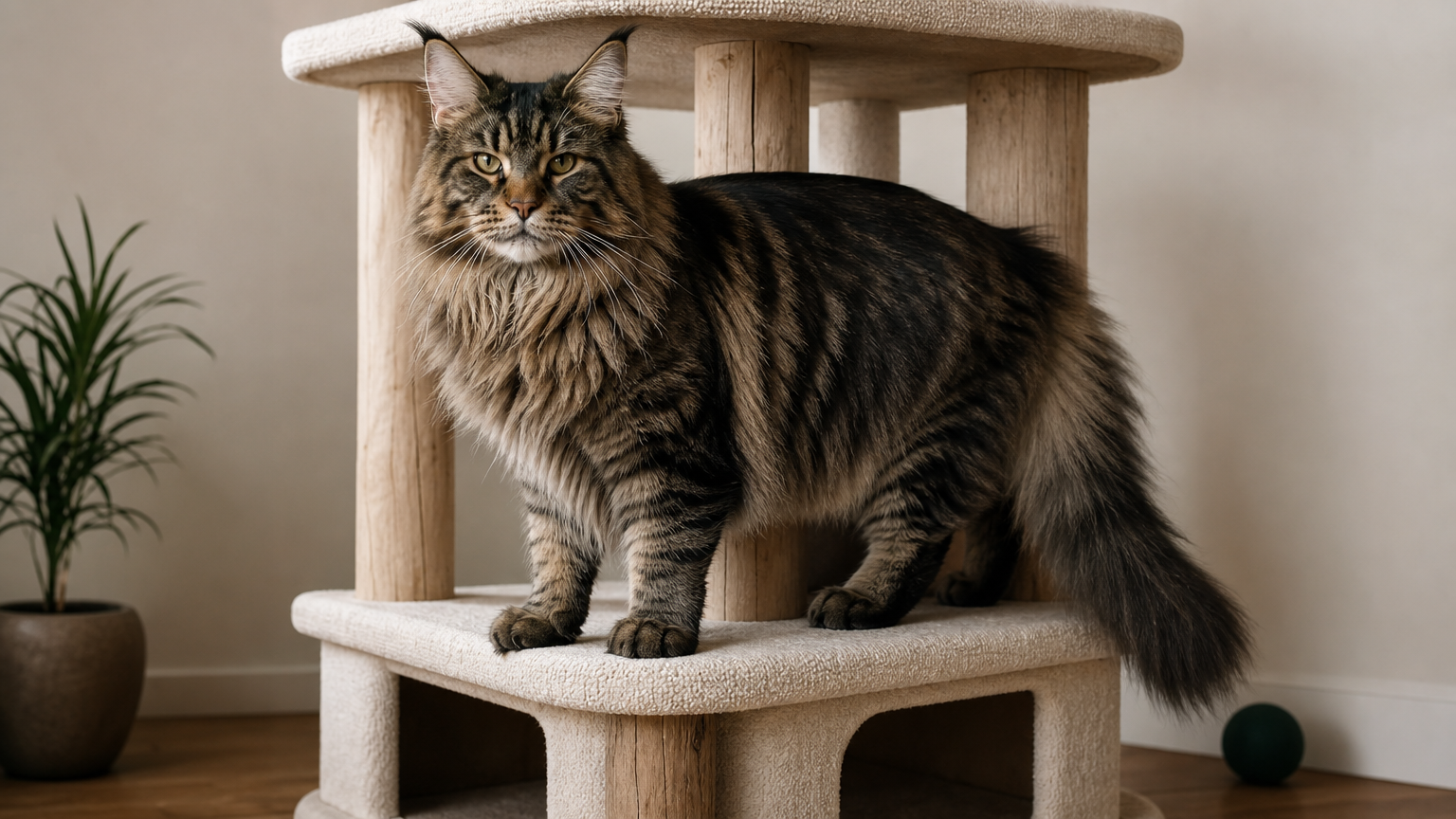
Maine Coons and other big-boned breeds can hit 18 to 25 pounds, and most standard cat trees simply aren’t built to hold that. This pick uses thicker posts, reinforced particleboard shelves, and a base wide enough to stop a large cat from rocking the whole tower when they jump down from the top perch. Think of it as a heavy-duty cat tree trunk tower rather than a lightweight starter model, with everything oversized to match a bigger cat’s stride and weight.
Key features
Bigger cats need more than a taller tree. These features are what separate a large-breed model from a standard one.
- Extra-thick posts (4.5 to 5 inches in diameter) that support full-body scratching without flexing
- Reinforced shelves rated for 25+ pounds per platform, not just total tree weight
- Wide-mouth condos (14 inches or larger) so a big cat can turn around inside without getting stuck
- A base footprint of 30 inches or more for real tip resistance
Who it’s best for
Owners of Maine Coons, Ragdolls, Norwegian Forest Cats, or any cat over 15 pounds should skip standard trees entirely and go straight to this category. It’s also worth it for households where a large dog occasionally bumps into furniture, since the reinforced base handles incidental contact better than lightweight builds.
A tree built for an average cat will wobble, crack, or tip under a Maine Coon, no matter how gentle the cat is.
Price range
Expect $150 to $280, since the reinforced materials and larger dimensions cost more to produce and ship.
What to consider before buying
Check the manufacturer’s weight rating per shelf, not just the tree’s total capacity, since that number tells you whether your specific cat can safely use the top perch.
3. The best cat tree for multi-cat households
Two or three cats sharing one tree sounds like a recipe for turf wars, but the right design turns that into a shared perch system instead of a fight. This pick spreads levels wide and staggers them at different heights, so each cat gets a platform without climbing over another cat to reach it. Multiple entry points matter more here than raw height, since cats in multi-cat homes tend to avoid trees where only one path leads to the top.
Key features
A tree built for several cats needs redundancy everywhere a single-cat model doesn’t.
- Multiple perches at varying heights (usually five or more levels) so cats can spread out instead of stacking
- Two or three separate condos, each with its own entrance, to reduce guarding behavior
- Wide platforms (16 inches or more) that let a cat lounge without another cat crowding the same spot
- Sisal posts positioned on more than one side of the tree, giving multiple cats a scratching spot at once
Who it’s best for
Households running two, three, or more cats benefit most, especially if one cat tends to guard resources. It also suits owners who’ve noticed one cat monopolizing a single-tree setup while the others scratch the couch out of frustration.
In a multi-cat home, the number of separate perches matters more than the tree’s total height.
Price range
Expect $180 to $320, since the wider footprint and extra platforms use more material than a standard single-cat tree.
What to consider before buying
Watch your floor space carefully, since multi-cat trees often need 30×30 inches or more of clearance, plus room around the base for cats to approach from different angles without bottlenecking at one entry point.
4. The best budget-friendly cat tree
Not every household needs a five-level tower with reinforced shelves and wide condos. Sometimes you just want a solid budget-friendly cat tree that gives your cat a place to scratch and perch without draining your paycheck. This pick strips the design down to the essentials, a two or three-level structure with sisal posts, one small condo, and a top platform, built on lighter particleboard that still holds up fine for cats under 12 pounds. It’s proof that a low price doesn’t have to mean a flimsy build, as long as you shop the right category instead of the cheapest random listing.
Key features
This category cuts extras, not core function. Here’s what a well-made budget tree still includes.
- Sisal-wrapped posts on at least the bottom two levels
- A compact base (18 to 22 inches) that still resists tipping for lighter cats
- One enclosed condo or hammock for napping
- A top perch around 30 to 40 inches, enough for casual climbing without ceiling clearance worries
Who it’s best for
Owners on a tight budget, renters testing whether their cat even wants a tree, and households with a single lightweight cat all do well here. It also suits anyone replacing a tree that got destroyed by moisture or a particularly aggressive scratcher, since a lower price makes replacing it again less painful.
A budget cat tree still works if it gets the posts and base right, even without the extra platforms.
Price range
Expect $30 to $60, occasionally less during sales events.
What to consider before buying
Read the weight limit closely, since many budget trees cap out around 15 pounds total structure weight, not per shelf. Skip any model with plastic-wrapped posts marketed as sisal, since cats often ignore fake texture entirely and go straight back to the couch arm.
5. The best cat tree for small apartments
Square footage is the real constraint in most apartments, not your cat’s ambition to climb. This pick solves that with a vertical, narrow-footprint design that uses wall height instead of floor space, often measuring under 20 inches wide while still reaching 50 to 60 inches tall. It works like a slim cat tree trunk tower, stacking two or three perches directly above each other rather than spreading them across a wide base, so it tucks into a corner without blocking foot traffic.
Key features
Apartment living demands a tree that earns its footprint. These details make the difference between a cramped tower and a genuinely usable one.
- Narrow base (16 to 20 inches) designed to fit corners, hallways, or beside furniture
- Slim sisal posts stacked vertically for scratching without adding width
- A single top perch high enough to catch window light, since apartment cats rely on that view more than yard cats do
- Lightweight construction (under 25 pounds) that’s easier to reposition as your layout changes
Who it’s best for
Renters and studio or one-bedroom apartment dwellers who need height without sacrificing walking space fit this pick best. It also suits owners who move often, since a lighter, narrower tree is far easier to break down and relocate than a sprawling multi-cat model.
When floor space is limited, height does the work that width usually does in bigger homes.
Price range
Expect $50 to $110, depending on how tall the model climbs and whether it includes a hammock or enclosed box near the top.
What to consider before buying
Check the base weight relative to the tree’s height, since a narrow footprint paired with a tall structure can tip more easily than a wide, short one. Anchor options against a wall add real stability if your cat likes to launch off the top perch.
6. The best modern and wall-mounted cat tree
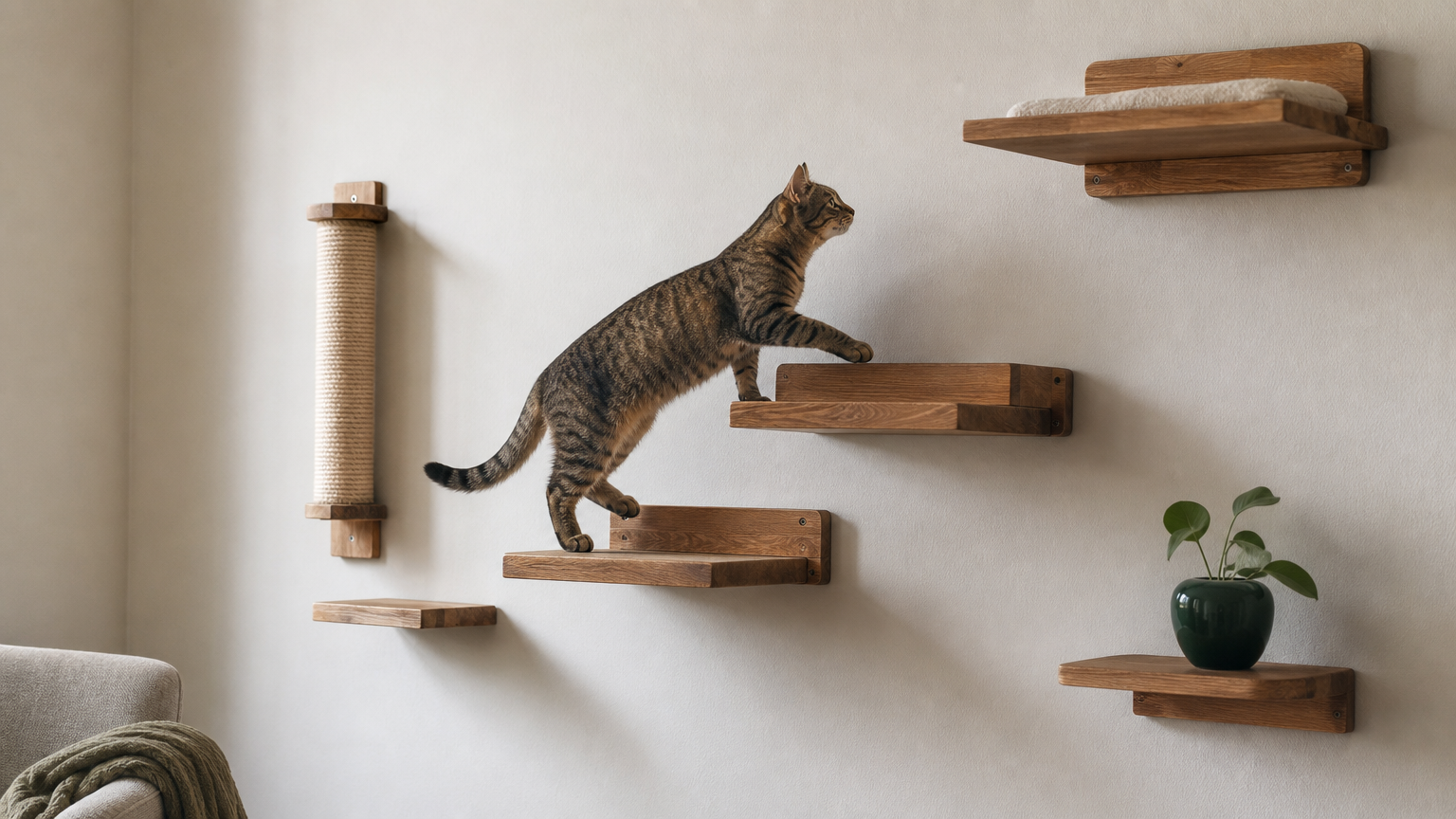
Some owners want their cat’s climbing setup to look intentional, not like a beige carpet tower parked in the living room. This pick swaps sisal-and-particleboard bulk for floating wall-mounted shelves and walnut-toned steps, built from solid wood or wood veneer with a matte or natural finish that reads more like furniture than a pet product. Instead of one freestanding trunk, you install a series of staggered platforms, a bridge, and a scratching post directly onto the wall, letting your cat climb up a designed route rather than a single vertical column.
Key features
Modern wall systems trade a single big purchase for a modular installation you build out over time.
- Solid wood or plywood shelves with rounded edges and a furniture-grade finish
- Modular pieces sold individually, so you can expand the route as your budget or wall space allows
- A separate sisal or jute-wrapped scratching cat post that mounts flush against the wall
- Hidden mounting hardware rated for wall studs, not drywall anchors alone
Who it’s best for
Owners who care about interior design, live in a home with visible living space they don’t want dominated by a carpet tower, or have limited floor space but plenty of wall height do best here. It also suits confident, agile cats who enjoy jumping between platforms rather than lounging in enclosed condos.
A wall-mounted system only looks better than a floor tree if your cat actually uses the route, so test climbing confidence before committing to a full wall.
Price range
Expect $120 to $300 for a full multi-shelf setup, since you’re typically buying several pieces separately to build out the full climbing path.
What to consider before buying
Confirm your wall has studs where you need mounting points, since drywall alone won’t hold a jumping cat’s full-force landing. Budget extra time for installation compared to a freestanding tree, since you’re drilling into walls rather than assembling a boxed kit on the floor.
7. The best cat tree for senior or low-mobility cats
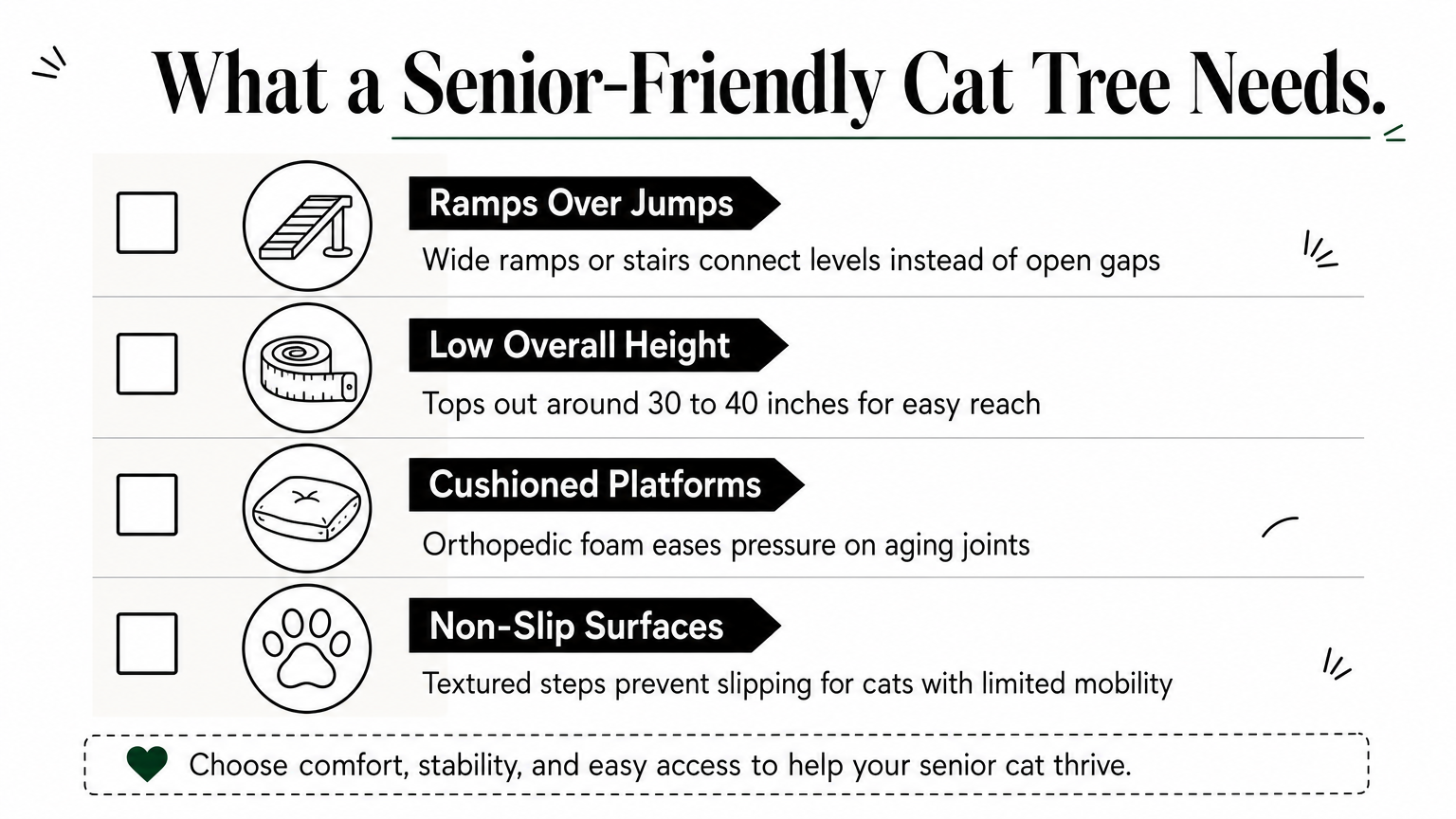
Older cats and cats recovering from injury or arthritis still want to climb, they just can’t manage a steep jump between platforms anymore. This pick swaps vertical leaps for a ramped, low-rise design, with wide steps or built-in ramps connecting each level instead of open air between perches. The whole structure sits lower to the ground, usually topping out around 30 to 40 inches, so a senior cat can reach every platform by walking up rather than jumping.
Key features
Comfort and joint support drive every decision on this build, not height or looks.
- Ramps or wide stairs connecting levels instead of gaps requiring a jump
- Low overall height (30 to 40 inches) that keeps the top perch within easy reach
- Extra-cushioned platforms, often with orthopedic foam, to ease pressure on aging joints
- Non-slip surfaces on ramps and steps, since arthritic cats lose confidence fast on smooth wood
Who it’s best for
Senior cats, cats with arthritis or hip dysplasia, and cats recovering from surgery all do better here than on a standard multi-level tower. It also suits owners who’ve noticed their cat suddenly avoiding a taller tree they used to climb without hesitation, which is often an early sign of joint pain worth mentioning to a vet.
A senior cat isn’t losing interest in climbing, it’s losing confidence in the jump, and a ramp fixes that instantly.
Price range
Expect $70 to $150, since the ramp hardware and reinforced padding add cost over a basic tiered model.
What to consider before buying
Check the ramp incline before buying, since anything steeper than 30 degrees still challenges a cat with limited mobility. Look for washable or removable covers too, since senior cats have more accidents and orthopedic foam holds odors if you can’t clean it properly.
8. The best cat tree for kittens
A kitten between 8 and 16 weeks old doesn’t need a six-foot tower, it needs something scaled to a body that still weighs under four pounds. This pick keeps everything low and gently graduated, with short perches, tight spacing between levels, and posts thin enough for tiny paws to grip. It works better as a training ground than a showpiece, teaching a kitten to scratch sisal and climb safely, and a little catnip on the scratching post speeds that lesson up before you invest in a bigger cat tree cat condo once they’re grown.
Key features
Kitten-specific trees prioritize safety margins over height, since a fall from even 20 inches can spook a young cat off climbing altogether.
- Short platform gaps (under 10 inches) so a kitten never has to leap far between levels
- Thin sisal posts (2.5 to 3 inches) sized for small paws still developing grip strength
- A low top perch, usually 20 to 30 inches, keeping the whole structure close to the ground
- Enclosed sides or a small condo box, giving a nervous kitten somewhere to retreat and nap
Who it’s best for
New kitten owners and households introducing a kitten to a home with existing furniture-scratching habits benefit most from this size. It also suits anyone raising a kitten alongside an older cat, since the low height keeps the setup approachable without the kitten needing to compete for the tall perches on an adult-sized tree.
A kitten tree isn’t a smaller version of an adult tree, it’s a training tool built around short jumps and easy wins.
Price range
Expect $25 to $50, since the smaller footprint and lighter materials keep costs down.
What to consider before buying
Plan on upgrading within a year, since most kittens outgrow this size by 8 to 10 months. Check that the base is still weighted enough to prevent tipping, since even a small kitten can rock a poorly built base during an enthusiastic pounce.
9. The best solid wood cat tree trunk tower
Some cats ignore carpet-wrapped posts entirely and go straight for a real tree branch on their next walk outside, which tells you something about what they actually want to scratch. This pick answers that instinct with a genuine wood trunk tower, built from a real, debarked tree limb or thick reclaimed lumber instead of particleboard dressed up with fabric. The bark texture, irregular curves, and natural bends give it a rustic look that reads more like a piece of furniture than a pet product, and the solid core means it won’t sag or wobble the way pressed-wood cores do after a few years of daily claws.
Key features
A true trunk tower earns its price through the raw material, not extra add-ons bolted onto a standard frame.
- Solid wood or debarked branch construction, often cedar, pine, or manzanita, with no particleboard core
- Natural bark or rough-cut texture that cats scratch instinctively without training
- A heavy, often concrete-filled base that resists tipping better than any weighted particleboard box
- Platforms shaped to the branch’s natural curve rather than flat-cut shelves
Who it’s best for
Owners who want their cat’s setup to double as a design piece, and cats who’ve always preferred scratching real wood over sisal rope, both do well with this style. It also suits households replacing a tree that’s been chewed or clawed down to bare board, since solid wood holds up far longer under repeated use.
A cat that scratches the porch railing outside will almost always choose real wood over synthetic rope indoors.
Price range
Expect $180 to $400, since sourcing and shaping real branches costs more than cutting standard boards.
What to consider before buying
Check the finish for sealants or stains, since some woods need a food-safe, non-toxic coating to be safe for a cat that chews bark while climbing.
10. The best enclosed cat house and condo tree
Some cats want walls around them before they’ll nap, not an open perch where anyone can see them from below. This pick leans into that instinct with a fully enclosed condo tree, stacking two or three plush-lined boxes on top of each other instead of open platforms, connected by sisal-wrapped posts and small entry holes just wide enough for a cat to squeeze through. Think of it as a cat tree cat condo built for hiding first and climbing second, which suits anxious or easily startled cats far better than a tower full of exposed shelves.
Key features
Enclosed designs succeed or fail based on how well the boxes themselves are built, not the tree’s overall height.
- Fully enclosed condo boxes with soft-lined interiors and small, cat-sized entry holes
- Removable cushions or liners for washing, since enclosed spaces trap fur and odor fast
- Stacked box design (two to three levels) connected by short sisal posts
- Ventilation gaps or a second opening in larger boxes, so the space doesn’t feel airless
Who it’s best for
Shy, anxious, or easily startled cats benefit most from a design that lets them retreat and observe the room without being visible themselves. It also suits multi-pet households where a cat needs a break from a dog or a more dominant cat, since a closed box offers real separation that an open perch can’t.
A nervous cat won’t use a tree until it offers a place to disappear completely, not just a high spot to watch from.
Price range
Expect $70 to $160, depending on how many boxes are stacked and whether the interior lining is plush or basic fabric.
What to consider before buying
Measure the entry holes against your cat’s size before buying, since overweight cats can get stuck squeezing into undersized openings. Remove and wash the liners regularly too, since enclosed spaces hide odor and shedding far longer than open platforms do.
11. The best premium cat tree splurge
Some owners want the best possible version of a cat tree cat condo, not just something functional. This pick sits at the top of the market, combining floor-to-ceiling height with premium materials like natural sisal rope, solid wood accents, and faux fur upholstery that actually holds up to years of daily scratching. It’s built less like a pet product and more like a genuine piece of furniture, with a finish and construction quality that matches the price tag.
Key features
Premium trees justify their cost through engineering most budget models skip entirely.
- Floor-to-ceiling tension mount that adds stability without needing a heavier base
- Multiple oversized condos with plush, removable, washable liners
- Thick natural sisal posts (5+ inches) rated for years of heavy daily use
- Custom-fit adjustable poles that accommodate ceiling heights from 8 to 10 feet
Who it’s best for
Households that want one tree to last a decade rather than replacing a cheaper model every few years fit this pick best. It also suits owners with multiple cats and high ceilings who want a single cat tree trunk tower dominating a room as both a design piece and a full climbing system.
A premium tree pays for itself in longevity, not in extra features you’ll never notice day to day.
Price range
Expect $300 to $600, occasionally higher for custom sizing or ceiling-mounted tension systems.
What to consider before buying
Measure your ceiling height precisely before ordering a tension-mounted model, since even an inch of miscalculation can prevent proper installation. Confirm the return policy too, since premium trees are harder to reship if the fit isn’t right for your space.
12. The best litter box combo cat tree
Space-strapped owners often end up choosing between a litter box and a climbing tower, when really they need both in the same footprint. This pick solves that by building a concealed litter box base directly into the bottom of the tree, with a full climbing structure rising above it, so the tower does double duty instead of eating up two separate corners of a room. The litter box sits inside a plywood or MDF cabinet with a front or side entry hole, while the top two-thirds function like a standard cat tree cat condo with sisal posts and a perch.
Key features
Combo designs succeed when the litter access and the climbing structure don’t interfere with each other. Look for these details specifically.
- Enclosed litter cabinet base with a removable tray for easy scooping and cleaning
- A separate top compartment for climbing, kept structurally apart from the litter area so odor doesn’t rise into the perches
- Ventilation slats or a small fan mount in the litter cabinet to cut smell buildup
- Sisal-wrapped posts and at least one open platform above the cabinet
Who it’s best for
Apartment dwellers and anyone tight on square footage benefit most, since one furniture piece replaces two. It also suits owners who want the litter box visually hidden from guests without sacrificing their cat’s climbing space.
Combining litter and climbing in one footprint only works if the smell stays contained, so cabinet ventilation matters more than the tree’s height.
Price range
Expect $100 to $220, depending on cabinet size and whether it fits a standard or jumbo litter tray.
What to consider before buying
Measure your litter box against the cabinet opening before ordering, and scoop more often than usual at first, since enclosed spaces trap odor faster than an open tray ever does.
13. The best cat tree with hammocks and lounging spots
Some cats care less about height and more about finding the softest possible surface to sleep on for sixteen hours a day. This pick caters to that instinct with a hammock-first design, swapping flat platforms for suspended fabric slings stretched between posts at two or three levels, plus a wide top perch for cats who still want a lookout spot. Instead of a tall cat tree cat condo built around climbing, this one is built around lounging, with the sisal posts mostly there to support the hammocks rather than encourage vertical scratching.
Key features
Hammock trees live or die on the fabric quality and frame tension, not the number of levels.
- Suspended fabric hammocks rated for 15+ pounds, stitched at all four corners to metal or wood frame anchors
- Removable, machine-washable hammock covers, since these surfaces collect fur faster than flat platforms
- A mix of hammock heights (low, mid, and top) so cats can pick sun exposure or privacy
- Sisal-wrapped support posts doubling as scratching surfaces between hammock levels
Who it’s best for
Older or less active cats who prefer sleeping over climbing do best here, along with any cat that already gravitates toward soft blankets or laundry piles over hard surfaces. It also suits owners who want a tree that looks inviting rather than utilitarian, since a row of hammocks reads as cozier than stacked platforms.
A cat tree only needs height if your cat actually wants to climb; some cats just want the comfiest napping spot in the house.
Price range
Expect $60 to $140, since hammock frames use less material than multi-condo towers.
What to consider before buying
Check the hammock’s weight rating against your cat’s actual weight, not just breed averages, and inspect stitching quality before the first use since a torn seam mid-nap startles cats off hammocks permanently.
Finding the right cat tree for your feline
Picking the right cat tree cat condo comes down to matching the build to your cat’s actual habits, not the fanciest option on the shelf. A senior cat needs ramps, a Maine Coon needs reinforced shelves, and a studio apartment needs height over width. Match those basics first, and the rest of the decision gets easy.
Buying the tree solves half the problem. The other half is teaching your cat to actually use it instead of circling back to the couch out of habit. A sturdy cat tree trunk tower gives your cat a place to go, but redirecting an established scratching habit takes a plan, not just new furniture sitting in the corner. If your cat’s still testing the armrest after the new tree arrives, see the current cat behavior and scratching offers for the step-by-step method that gets cats scratching where you want them to, in a week rather than a guessing game.